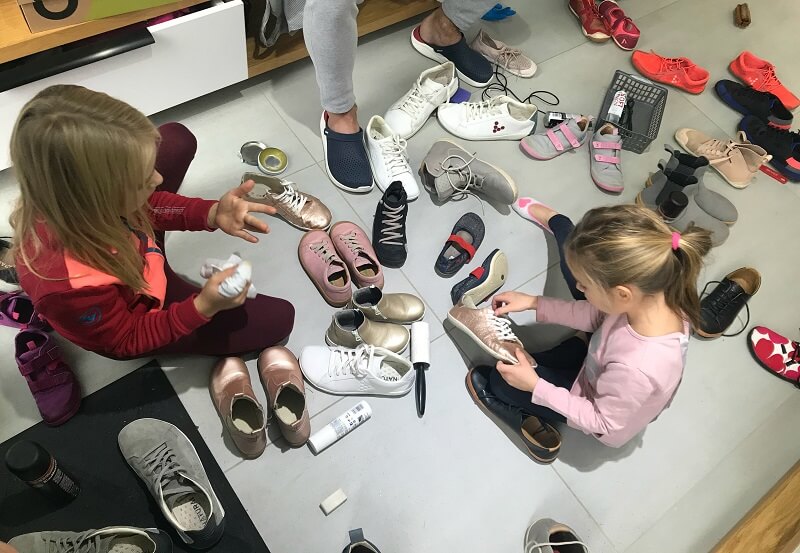
Prevention, prolonging lifespan, revival...
With regular care, your shoes will serve you better and longer. They will have a more attractive appearance and you will prevent peeling, flaking, cracking…
How to do it?
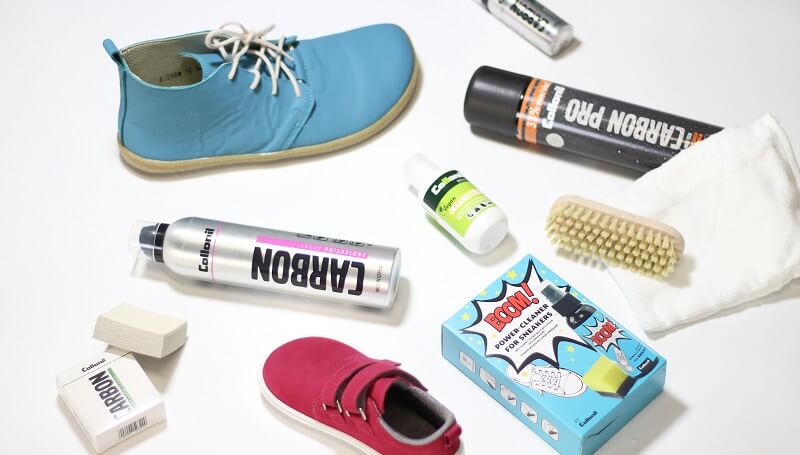
The shoe needs to be dried, cleaned, nourished, and protected.
Drying
Moisture is bad for both the shoe and the foot. Always wear socks in any closed shoes, at least low ones. Socks are easy to wash, shoes are harder. Less sweat will get into the shoe fabric, which can cause odor, mold, color fading, and peeling, because sweat is aggressive.
When you take off your shoes at home, let them air out in open space, remove the removable insole, if there is one, and place them in a closed shoe rack only after a few hours. Similarly, let shoes dry properly if they are wet from outside.
Do not dry shoes on heaters, with a hairdryer, etc., radiant heat causes deformation and damages some materials, e.g., leather, which hardens and cracks, similar to rubber.
Cleaning
Not all materials are the same...
- For smooth leather, a damp cloth is enough to wipe away dirt and dust. You can use a cleaning product, but it is often unnecessary, as dirt does not penetrate inside.
- Suede, nubuck, brushed leather. It does not wear, but it gets dirty. Try cleaning it dry to preserve the surface nap. A crepe brush and Carbon cleaning block work well. They remove dirt and roughen the non-smooth surface. If dry cleaning is insufficient, use cleaner (foam, lotion) to remove more dirt, but leather may soften slightly and change color.
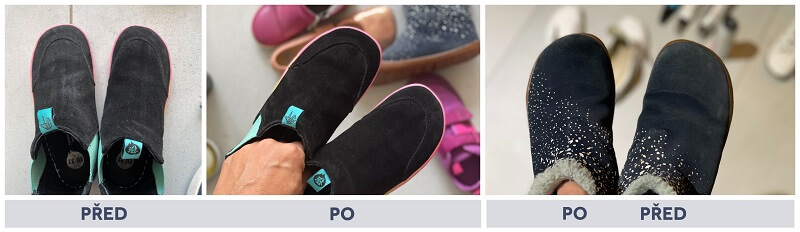
- Textiles are harder to clean, dirt penetrates inside the breathable surface and is not easily wiped off. Some shoes can be washed on a gentle program, but most can only be lightly hand washed. Watch colorfastness, scrubbing with a brush may damage the surface. Some synthetic materials are more stable.
- When to machine-wash shoes? Only when there is no other option. After washing, they often look like new, but leather usually hardens and can warp. Washing is harsh on glue and color. Also, shoes usually shrink, even rubber ones like Crocs or rain boots. So you get clean shoes and fresh scent, but likely lose some shape or bond. Washed shoes cannot be claimed for color fading or separation if not labeled washable, so use the washing machine as a last resort.
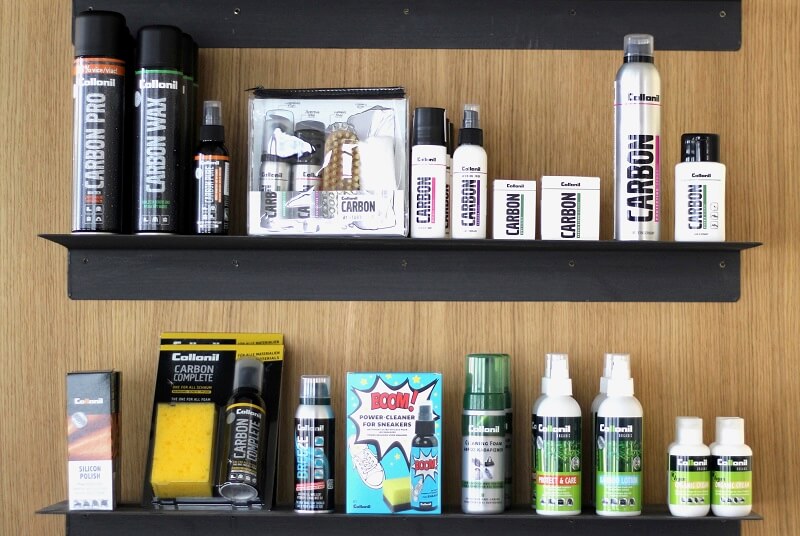
Nourishment
Care for materials, especially leather.
- Smooth leather should be regularly creamed to maintain flexibility and prevent cracking. Use classic neutral cream, vegan or traditional. Colored creams mainly cover scuffs.
- Do not oil leather with nap; cream will permanently smooth the surface, which should remain textured for suede and nubuck.
- Textiles and synthetics usually do not require nourishment; do not oil them.
- Rubber – usually rain boots – should be occasionally lubricated; even natural rubber can crack with age.
Protection
Impregnate your shoes. This increases water resistance, prevents dirt penetration, and products with UV filter fix colors. It makes sense to spray shoes even in summer, e.g., canvas sneakers. Winter impregnation protects shoes from salt penetration, which often causes peeling because it damages the glue.
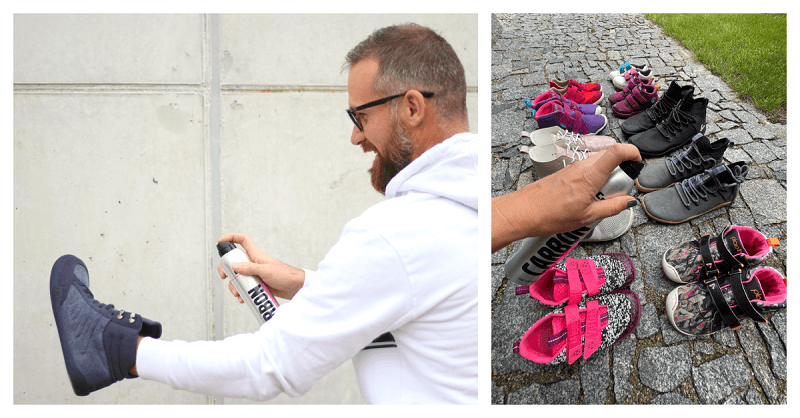
Impregnate new shoes before the first wear to ensure optimal protection from the start.
Apply impregnation everywhere and in sufficient layer, spraying the surface until the shoe absorbs the product. Carbon can be applied in 2 layers.
Be careful with soggy grass. Wet ground is like a sponge; there is a big difference between running 5 minutes in wet grass or 5 minutes on firm ground even in light rain. Grass works like a brush and can wear off impregnation, so reapply protective layer after walking through meadows.
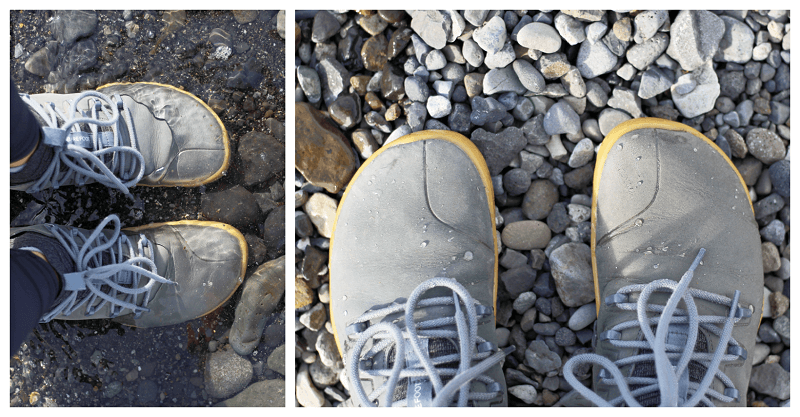
Impregnation increases water repellency, helping water bead up and run off instead of soaking in. It does not make shoes fully waterproof, although in our controlled test, impregnation performed excellently against water.
When? Mainly regularly!
Always after heavy dirt, getting wet, or after about 2-3 weeks when the effect wears off.
Apply creams and impregnation to dry shoes, check suitability for the material, exposure time, and test in a less visible area for color effects.
And because there is no planet B, we support the eco-friendly line, almost 100% biodegradable, and are proud that Collonil received from a recognized German institute the Sustainability Certificate and cruelty-free. This ensures minimal environmentally harmful substances and a high proportion of natural ingredients. Their organic line is fully natural, cream is vegan, and dangerous chemicals PFOA and PFOS were removed from other products, like Carbon. Aerosols do not contain ozone-depleting gases. Applause!