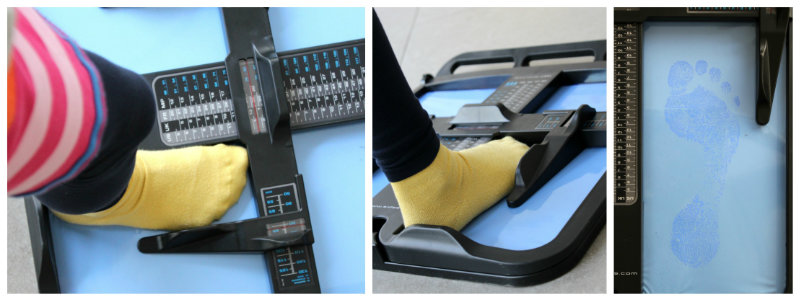
Measure your foot size. You’ll choose the right shoe size much more accurately – even without trying them on.
Quick guide to measuring your foot
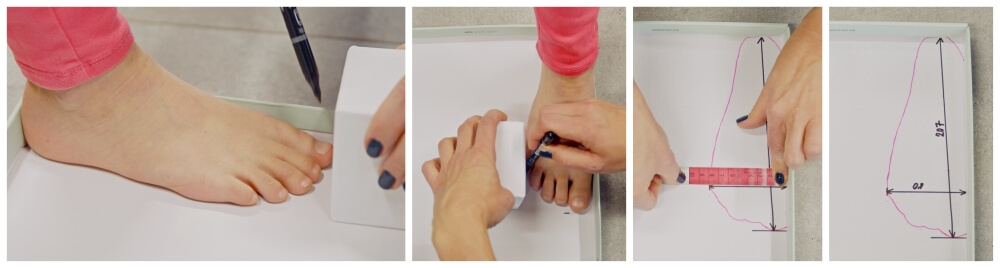
- Stand barefoot on a sheet of paper (ideally with your heel against a wall)
- Trace the outline of your foot (hold the pencil vertically)
- Measure the foot length in millimetres (from the centre of the heel to the longest toe)
Why shoe size alone is not enough
Do you choose shoes only by their size number? Unfortunately, every manufacturer uses different sizing. Shoe size is only a rough guide – what really matters is that the shoes fit your feet properly. You probably don’t want to waste time trying multiple pairs and returning those that don’t fit.
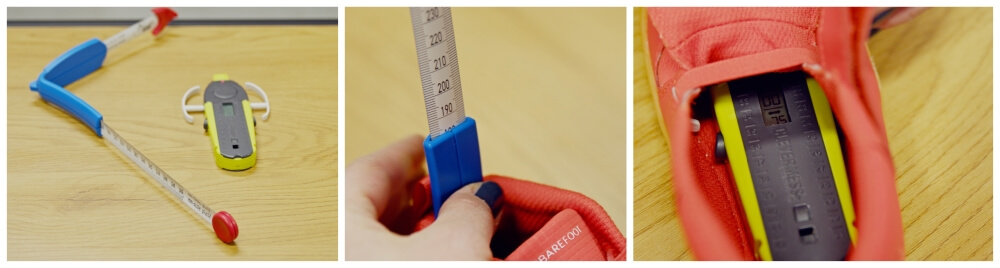
That’s why we carefully measure all shoe models using professional tools and list the inner length and width of each size in millimetres. When you know your foot measurements, you can immediately see whether your foot will fit – even without trying the shoes on.
Unfortunately, you can’t determine the right shoe size based solely on foot length, as there is no universal size chart. However, for every model we provide a size chart with actual inner shoe dimensions. Spend one minute measuring your foot and save dozens of minutes later. We’re happy to help…
How to measure your foot? Read the complete instructions
Below you’ll learn how to measure your foot as accurately as possible, how to work with the measurements and how to use them to find shoes that fit perfectly.
Additional tips for accurate foot measurement
You’ll find the basic instructions above, but for the most accurate results we recommend the following:
- Measure while standing – body weight slightly spreads the foot, so always measure (and try shoes on) while standing
- Measure in the afternoon or evening – feet tend to expand slightly during the day
- Measure both feet – sizes may differ, always go by the larger foot
- Measure foot width as well – length is key, but width helps determine which brands will suit you better; simply measure the widest point perpendicular to the length
Feet can also differ in overall shape, toe shape, instep height, ankle circumference or arch height. These parameters help us distinguish suitable models for different foot types in our comparison reviews. If you’d like to learn more, read our article Types of feet.
Children’s foot size by age
Children grow quickly – but each at a different pace, so don’t expect a universal chart. In a separate article, we explain how fast children’s feet grow. We recommend checking foot size regularly:
- toddlers – every month
- preschool children – every 2 months
- younger school children – every 3 months
- older school children – every 4–5 months
- teenagers – every 6 months
It’s also a good idea to re-measure feet right before a new season starts (school slippers before term, winter boots before the first frost, etc.). Don’t rely on visual estimates or buying shoes “one size bigger” – a child’s foot may have grown by several sizes since the last season.
How to tell when shoes are too small
Appearances can be misleading – pressing the toe area doesn’t reliably tell you whether shoes are too small. Asking children isn’t helpful either, as they often can’t judge what fits correctly. Putting a finger behind the heel can also distort the result, as children may curl their toes inside the shoe.
You can get a better idea by removing the insole (if removable) and placing the child’s bare foot on it. Even this method isn’t ideal, as toe box height can vary. Comparing foot length with the inner length of the shoe is the most reliable way to determine whether it’s time for a new pair.
Additional size number in children’s shoes
Feet swell slightly during the day and toes need room to move. That’s why foot length should never equal the inner length of the shoe – extra space (called Additional size number) is necessary. It varies by shoe type (for children, we also add room for growth):
- first shoes, pre-walkers: 5–9 mm
- closed shoes: 10–12 mm children, 5–7 mm adults
- open sandals: 6–8 mm children, 4–6 mm adults
- winter and outdoor shoes: 12–15 mm children, 7–10 mm adults
Which shoe size should you choose?
We’ll help you choose the right size. After measuring the foot and adding the additional size number, just follow these three simple steps:
- Filter products by inner shoe length in the desired category. Example: child’s foot length 207 mm + 12 mm allowance = ideal inner length 219 mm → set filter to 216–222 mm (you can also use the Easy Size Finder tool in the top menu).
- Choose the shoes you like and check the exact length and width for the selected size.
- If you’re exactly between two sizes, choose the larger one (we always offer an extended 21-day return period).
If you’re ever unsure, feel free to contact our customer service. We’d rather go through everything with you than have you choose the wrong shoes.