
Curious about how impregnation works? To illustrate it, we carried out a simple experiment that explains the basics of “how” and “why.” Our testing also provides convincing proof that impregnation (we recommend Collonil) really works and is worth using regularly.
Impregnation Test
Used Tools

We decided to demonstrate how impregnation works using an ordinary coffee filter paper, which normally allows liquids to pass through. We fixed it into a special testing container that allowed us to pour water in from the top and blow air from below using a small pump. For the impregnation itself, we used the customer-favorite spray Collonil Carbon Pro.
Impregnation
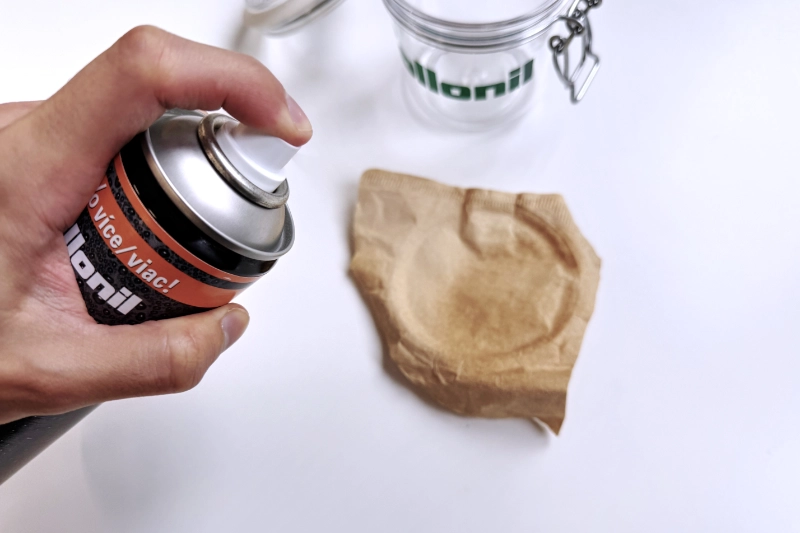
We sprayed the impregnation onto the filter paper using a standard crisscross pattern from about 30 cm away to create an even protective layer. On shoes, this layer protects not only against water but also against dirt and, during winter months, against salt penetration (which can cause the glue to weaken and the shoes to come apart). Before applying impregnation, always dry and clean your shoes thoroughly to avoid sealing in dirt. Just like with shoes, in our experiment we also let the impregnation dry completely before use.
Water Resistance
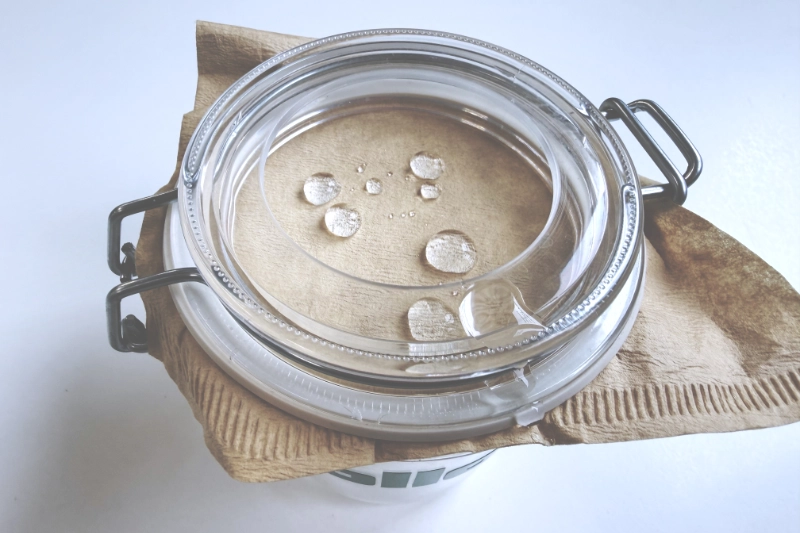
We first poured a small amount of water onto the filter paper, simulating light rain. Instead of soaking in, the protective impregnation layer kept the droplets on the surface — on a treated shoe, they would naturally roll off onto the ground. With this simple treatment, you get shoes suitable for rain or wet grass (though note that grass acts like a brush and gradually wears off the impregnation layer, so we recommend reapplying it regularly).
Waterproofness
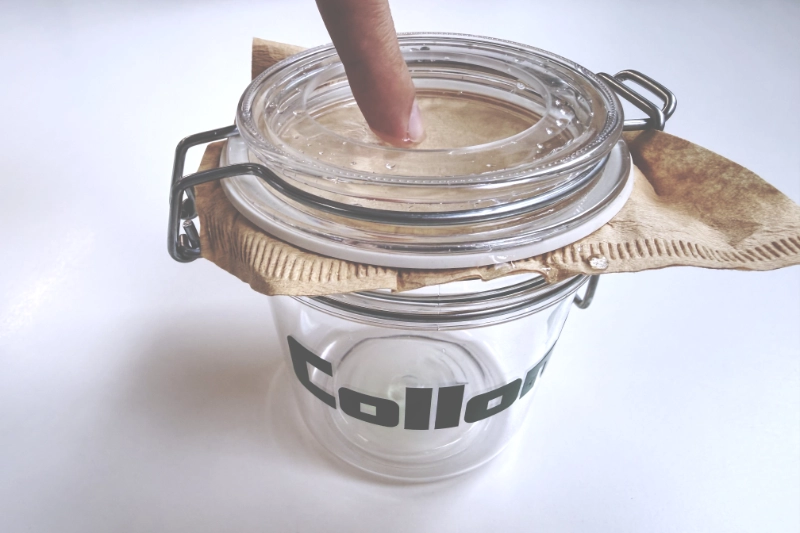
n our experiment, we went a step further and completely covered the filter paper with about a centimeter of water. As you can see in the attached photo, not a single drop made it through to the bottom (dry) part of the container — the impregnation layer held firm. It proved to be even more effective against water than waterproof shoes with a membrane.
Breathability
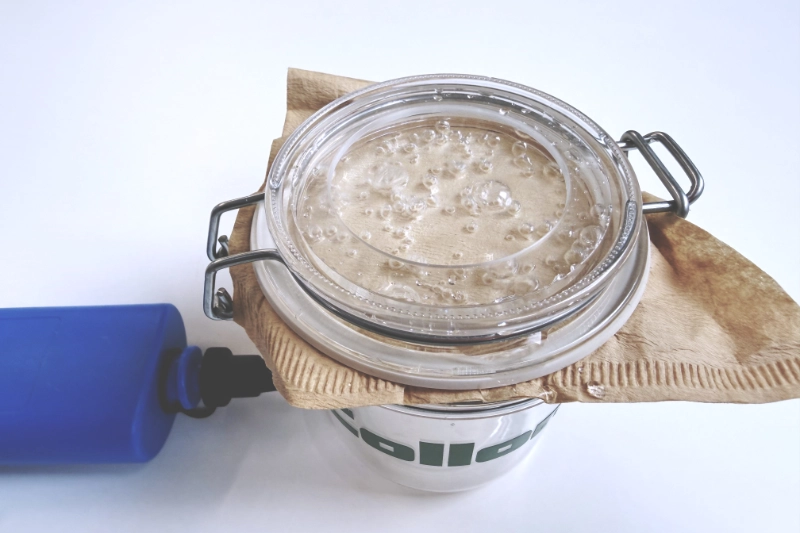
In the final part of the experiment, we used the pump to blow air from below. The air particles passed through both the filter paper and the impregnation layer, as shown by the bubbles rising to the surface. This breathability of the impregnation effectively prevents feet from getting sweaty inside the shoes.
Summary
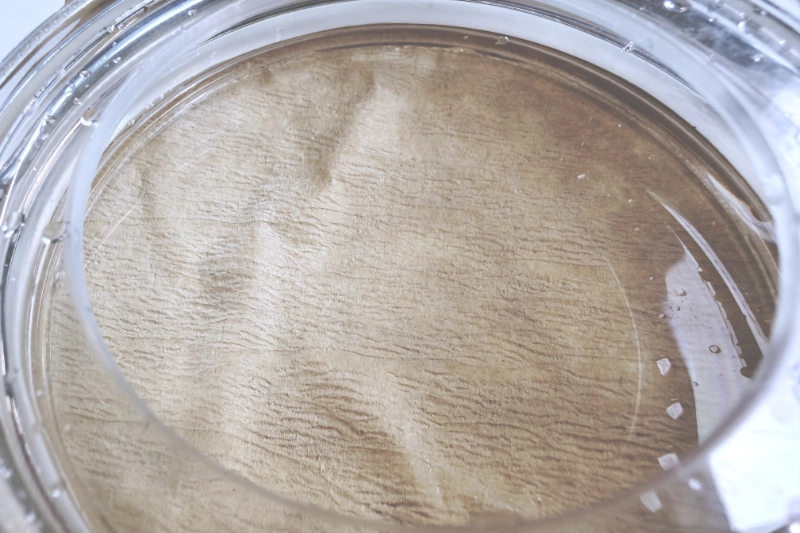
Practical testing confirmed that the impregnation layer works similarly to a membrane — it blocks liquids but allows air to pass through. This means that even a foot enclosed in a shoe can still “breathe” freely. After completing the test, we left the container filled with water to stand for a while, and even after several dozen minutes, not a single drop seeped through the filter paper. This only confirmed how important it is to take regular care of your shoes — not just through cleaning, but also by reapplying impregnation.