
When to give the baby the first pair of shoes? What types exist, and how do they vary? Why are first shoes important? What are the most popular brands, and which first shoes to choose? We have summarised tips for parents of first walkers.
Content of the article
- Development of the child's foot
- How to choose the first shoes
- Where to buy the first shoes
- Tips for first steps
- Final summary
Development of the child's foot
According to physiologist, over 90% of children are born with healthy feet, but over 95% of children suffer from foot deformities by the time they enter first grade! This dramatic deterioration is mainly due to inappropriate first shoes and socks.
If you want to keep your children's feet healthy, we recommend the following steps:
- read the article about natural foot development by physiotherapist Romana Cihlarova
- keep children barefoot as much as possible from birth to school age (whenever the environment allows it)
- when choosing first shoes, follow the advice below
When to buy the first shoes
There is no answer to this question in the form of a specific age, because every child develops at a different pace. In general, however, it makes sense to buy the first shoes only once the child can walk independently through space and moving on their feet makes up the main part of their day.
- Should children wear shoes in a stroller? Definitely not if they are not walking yet. Tiny shoes may look stylish, but they restrict the free development of a child’s foot. For beginning walkers, take toddler shoes with you, but put them on only when you take the child out of the stroller.
- Crawling in shoes? Absolutely not. Crawling helps shape the arch of the foot. A child wearing shoes would learn an incorrect movement pattern, shifting the foot inside the shoe instead of pushing off from the surface with their toes.
- Shoes for the first steps? Not yet - far from it. For the first steps, a child needs to understand the principles of natural balance. The active work of a barefoot, especially the spreading of the toes, helps maintain stability. Even in socks, the foot slips unnecessarily.
- What if the child is cruising around furniture? At the beginning, children learn to walk with support, holding on to beds, tables, cupboards and walls. During this period, do not pull them by the hands or put them in walkers, as both can negatively affect their movement patterns. Similarly, there is no point in putting slippers on them at home - barefoot movement will work much better for them. If your floors are cold or you have extremely hard tiles, we recommend non-slip socks, but they must not be too narrow.
- Walking freely in open space? Once the child can walk independently and without support, you reach an important turning point. Watch their predominant way of moving - if they spend most of their waking time on their feet, you can start thinking about shoes. But as long as sitting and crawling still prevail, it is better to wait.
Keep in mind that shoes are primarily meant to protect the feet. If there is no risk of injury or significant cold exposure to the child’s foot, let children run barefoot even at an older age, or in sufficiently wide non-slip socks.
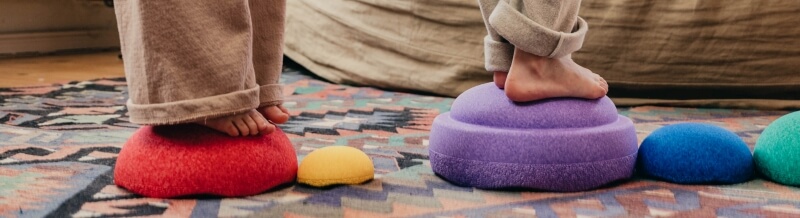
"You will probably find cool, smooth floating floors, cool tiles or warmer, soft carpets in your neighbourhood. In summer, make sure that children walk barefoot on grass, stones, sand, slippery or rough surfaces, and wade in the water." advise the experts from physio clinic.
How to choose the first shoes
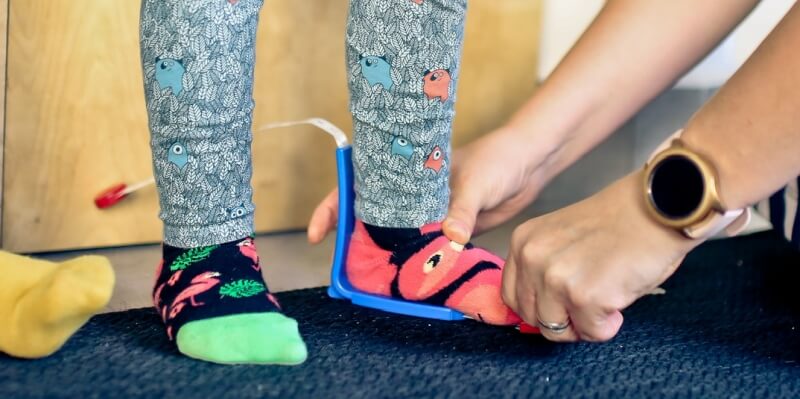
The first step in choosing a shoe is to measure the child's foot accurately. Trace the child's foot on paper and measure the length and width at the widest point. Add 10-12 mm to the measurements (or 5-9 mm for the very first shoe, so babies don't trip over the toe) to give babies enough room to walk and grow in the shoe.
Properties of the first shoes
"If we put a tight shoe on a child's foot, we deactivate the muscle groups involved in the formation of the arch," agree the experts at the podiatry clinic. According to them, a child's shoe should have a sufficiently flexible sole and adapt to the natural foot shape.
They recommend switching shoes and choosing the right type of shoe for each activity. They strongly discourage shoes with heels that shift the centre of gravity. They advise young children to walk barefoot on a soft surface (high pile carpet, flexible mat) to relax the foot and exercise the muscles.
Different types of first shoes
When choosing shoes for first walkers, you will come across the following categories:
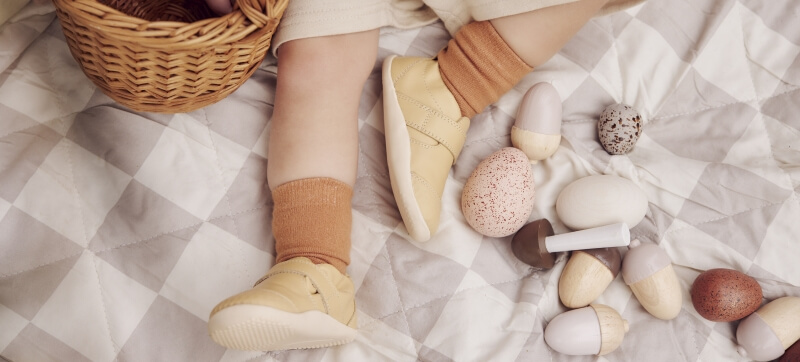
- infant shoes - soft all-leather booties that do not have a durable sole, so they are recommended as indoor slippers
- toddler shoes - similar to infant shoes, but with a more durable sole, allowing outdoor use
- house slippers - slightly sturdier home shoes in construction and sole compared to infant shoes
- kid's shoes - shoes for beginner walkers can be of various types, differing from shoes for older children by a lower size (most often 18-22)
What should beginner walkers wear in wet conditions?
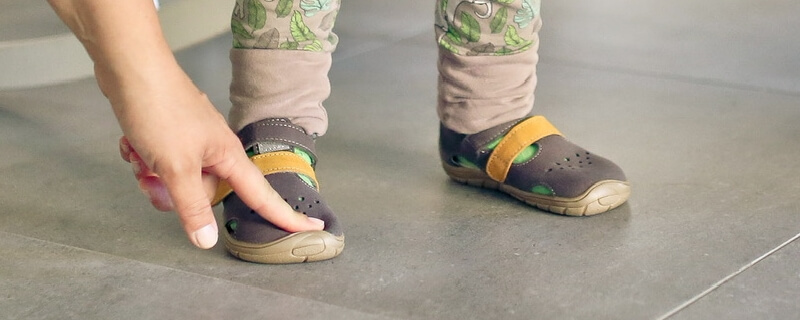
Is the weather unpleasant and you’d like to have a backup option for wet conditions for beginner walkers? Mild dampness can be handled by soft Bobux Xplorer shoes (especially the Rover models, which have a higher cut to provide better warmth). For heavy rain and puddles, it’s best to equip kids with rain boots. Bundgaard Cover are a great choice for the youngest walkers (they have a lower height, can be tightened well at the top, are easy to put on, and are overall flexible and lightweight).
Consider buying the first winter shoes according to the current weather and the expected time spent outdoors. In milder winter conditions and for shorter walks, thicker socks in regular closed shoes will be enough. But for snow, frost and longer walks, choose insulated winter shoes that prevent snow from getting inside.
Common mistakes
Watch out for common mistakes that can hinder the healthy development of a child's foot:
- Putting on shoes in the pram - the baby does not walk in the pram, so does not need any shoes. Small shoes may look cute, but they fundamentally restrict the free movement and growth of the foot. The same applies to crawling, where a baby in booties (even soft shoes) uses his joints and toes differently than he would naturally barefoot due to the obstructing effect of the footwear.
- Check the size by squeezing the toe box of the shoe or by sticking a finger behind the heel - both of which can cause the child to bend their toes, which can give a false impression of space even in tight shoes. Therefore, measure the size of the bare foot outside the shoe, then compare it with the stated internal dimensions of the shoe.
- Use of walkers and hand pulling - a child with this form of support does not naturally strengthen the body and gets used to walking with assistance. Don't try to rush walking on two because it will come naturally. It is best not to interfere with the child's gait development at all.
- Leaving the choice up to the child - small children do not know what shoes they need. They cannot objectively judge whether the shoes fit them well and may stubbornly insist on choosing shoes that are attractive but do not suit them in size at all.
- Recommending sturdy shoes - a sturdy heel counter fixes the heel in the correct position and prevents the shoes from slipping off, which is especially useful for children with health problems (e.g. valgus ankle). A firm hold of the foot at the ankle is essential for healthy movement patterns (that's why closed slippers are worn to kindergarten, not slippers). However, this should not be confused with the requirement for rigid footwear, which should be as flexible as possible to allow for correct gait and muscle function.
Where to buy the first shoes
To save yourself a trip to the store with an impatient children, order them their first shoes online with fast delivery, try them on in the comfort of your own home and easily return any that don't fit.
Here at Footic, we specialise in children's shoes. We carefully measure all our shoes and provide detailed comparative reviews for a better understanding of the range. We offer a wide selection of healthy barefoot shoes for the natural development of children's feet.
Popular brands of first shoes
When choosing infant shoes and toddler shoes, most customers reach for brands:
Tips for first steps
If you want to help your child take their first steps, try the following tips from physiotherapist Karen Mayes:
- From birth, place an awake baby on its tummy to strengthen its neck muscles and to be able to hold its head independently.
- To improve spatial perception, create a stimulating environment around your child to explore.
- A child needs strong internal muscles to turn over and then sit up or crawl, so let them move freely whenever the environment allows, and give them as much exercise as possible.
- Motivate your toddler by placing his favourite toys on the couch to try to get behind them while kneeling and then standing by the furniture. Give him time and plenty of encouragement.
- To practice walking, prepare a soft environment for your barefoot child (carpet, mat), don't be afraid to let him fall on his butt and stand up independently because it is a natural learning process.
- If you want to offer your baby support in his first steps, hold him lightly by the hips, not by the arms, which would transfer weight to the upper body.
- To improve independent spatial walking, you can "pass" your child to another adult. At first, at a distance of 1-2 steps, try to lengthen the space between you.
- When it comes to buying your first pair of shoes, measure your foot carefully and get the first shoes that are in line with the natural development of your child's foot. Don't be afraid to reach for barefoot shoes that meet the required parameters.
How to care for shoes
Young children often trip, fall, bump into objects, etc. To prolong the life of children's shoes, use care products. Always dry shoes thoroughly, clean with a cleaner, nourish with cream and protect with an impregnation.
When to replace the first shoes
It depends on how fast the child's foot is growing, so measure the size of the foot regularly and keep an eye on the length and width. The minimum oversize in a shoe for a full unwinding stride should be 4-5 mm, so look for new shoes if this limit is exceeded.
Toddlers usually go through about 3 shoe sizes a year, preschoolers 2 and schoolchildren 1-2. Every child has an original foot shape, so we do not recommend inheriting worn-out shoes. The impetus for immediate replacement should be any limitation in proper function or damage, in addition to a small size.
Final summary
Let children run barefoot for as long as possible, and get them their first shoes when they spend most of their time walking independently. When choosing shoes, make sure they are flexible and have plenty of toe room; it is generally a good idea to look for barefoot shoes that respect the natural development of the foot.
Before buying your child's first shoes, measure the foot and then choose from the available sizes. Buy shoes online to save yourself the hassle of dragging your baby to a store. At Footic, you'll find all infant shoes and toddler shoes in stock, with fast delivery and easy returns.