
Running without shoes and in barefoot shoes – naturally and safely
Do you love running but hate squeezing your toes into narrow running shoes? At the same time, are you worried about getting injured if you ran completely barefoot? We'll show you how to keep your feet safe while still enjoying your run. We've put together everything you need to know about running barefoot and in barefoot shoes.
Table of contents
- Why everyone's talking about barefoot running
- How is running in barefoot shoes different?
- Proper (barefoot) running technique
- Benefits and risks of barefoot running
- How to start running barefoot
- How to choose barefoot running shoes
Why everyone's talking about barefoot running
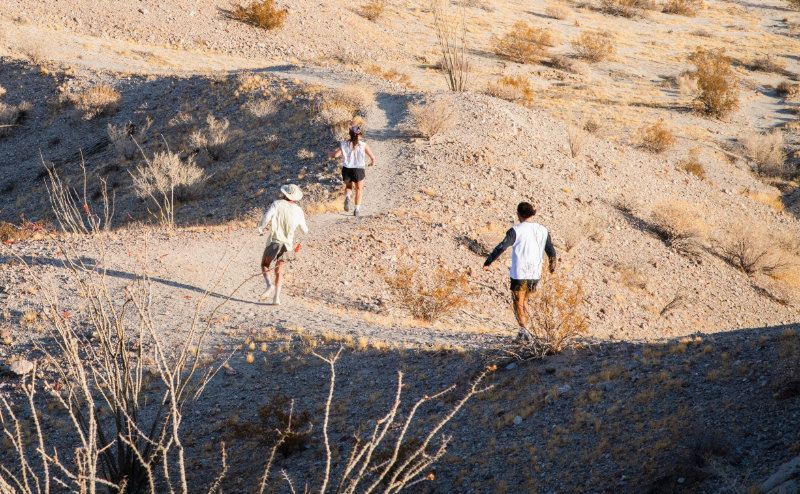
Barefoot running is one of the most natural movements that has accompanied humans since the very beginning. People ran while hunting and gathering food – running allowed them to cover both short and long distances. Today, we're returning to our roots and healthy movement patterns.
Barefoot running was popularised in 1960 by Ethiopian runner Abebe Bikila, who won the marathon completely barefoot at the Rome Olympics. The benefits of running in minimalist footwear were described by Christopher McDougall in his bestseller Born to Run (2009). The story of miraculous healing from previous running injuries through barefoot movement, along with the extreme feats of ultramarathon runners from the Tarahumara tribe, captivated American audiences and sparked demand for healthier shoes.
How is running in barefoot shoes different?
Discover the differences between running in barefoot shoes, running completely barefoot, and running in conventional footwear.
Why not run in ordinary running shoes?
Recreational running (jogging) began spreading worldwide from the 1960s, when the first running club for recreational athletes was founded in Auckland. Manufacturers responded to the growing demand for running shoes with a new type of trainer featuring a cushioned sole that made running manageable even for complete beginners.
However, when you run without developed musculature and knowledge of proper movement technique, you land on your heel with a straight leg at the knee. "When the heel strikes the ground, impact forces are generated that transfer to the calf muscles, thigh muscles, and also affect the knees, hips, and spine. Although running shoe manufacturers try to reduce hard impacts using modern, technologically advanced materials, even the best shoe cannot prevent these impact forces from occurring." describes the problem Mgr. Iva Bílková from FYZIOklinika in Prague.
Experiments have shown that, by comparison, runners intuitively land more on the midfoot in barefoot shoes, because they sense that a heel strike could quickly lead to injury. Under the body's weight, the foot spreads evenly, rolls forward to the toes more quickly, and pushes off the ground more efficiently.
Why not run completely barefoot?
Physiotherapist Bílková describes the mechanics of barefoot running: "Barefoot runners and indigenous people in the jungle naturally land on the forefoot when running, which provides excellent shock absorption. The foot cushions the body's weight on landing, the heel lightly touches the ground, and the elasticity of the Achilles tendon allows the body to spring forward again. Steps are shorter, the rhythm is faster, and landings occur beneath the centre of gravity. The impact forces generated on foot strike are minimal and transfer less to muscles, joints, and the spine. This kind of running is gentler and less energy-demanding."
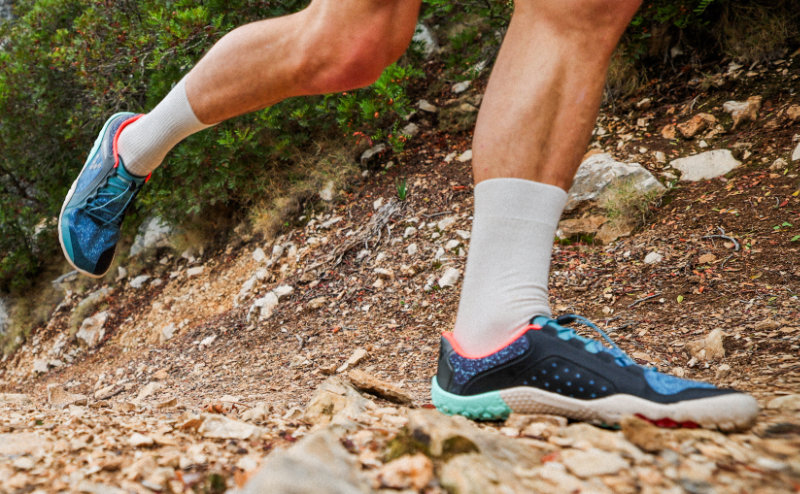
Unlike running in a forest, where soft soil cushions the impacts on bare feet, on hard urban surfaces you need to protect your feet with shoes. To preserve the key benefits of barefoot running, we wholeheartedly recommend barefoot shoes. Thanks to the wider toe box, your toes stay spread during running, the transverse arch functions better, the flexible sole allows a natural push-off, and all muscles are naturally exercised and strengthened.
Proper (barefoot) running technique
For healthy movement during barefoot running, make sure you have:
- Your body leaning forward – Don't try to bend at the waist; instead, lean your whole straight body from the ankles (as if you were falling forward and your legs were catching up).
- A straight spine – Your spine and sternum should point upward, chest open. You shouldn't be slouching or arching your back.
- Your gaze directed ahead – Keep your eyes on the path in front of you.
- Relaxed shoulders – Don't hunch them up toward your ears.
- Elbows at roughly 90 degrees – Tensed biceps would lead to excessive tension.
- A light, springy stride – With a cadence of at least 3 steps per second.
- Belly breathing – Try to inhale deeply through your nose, directing the breath toward your pelvis (so that your belly inflates more than your chest on each inhale), which will improve your overall endurance. Exhale equally slowly (over as many steps as possible). Switch to chest breathing and shallow, rapid mouth breathing only when you start running out of breath.
Leg movement should not originate from the pelvis and hips, but from the push-off of the toes against the ground. You should land on the midfoot (not on your toes – you're not ballerinas), softly and quietly.
Benefits of barefoot running
Why switch to sports barefoot shoes? They'll bring you the same joy as when you head outside in trainers at the start of spring. They're lighter, your feet can move more freely, and the closeness to the ground will boost your mood.
Your sensitivity will increase too. It's as if a thin sole opens up a whole new world you've been missing out on. Your feet begin telling richer stories about the surface, allowing the rest of your body to respond more precisely and dynamically.
On the other hand, pain will decrease – significantly! No more unpleasant heel-pounding or cramped toes in a narrow toe box. With proper movement technique, you'll also ease the strain on your joints. The more often you run, the sooner you'll notice the difference in how much less stress individual body parts endure.
That doesn't mean you're exercising less. Where conventional shoe cushioning does everything for you, barefoot shoes let your muscles, tendons, and ligaments work to their full potential. Barefoot running is a healthy way to strengthen your feet.
Risks of running
Although barefoot runners praise the benefits mentioned above, when running barefoot or in minimalist footwear you should (especially in the beginning) be mindful of potential risks to avoid injury.
The biggest problem can be caused by not adapting your running technique. If you keep heel-striking while running barefoot, you're setting yourself up for serious health issues (heel spurs, stress fractures, and more). According to Harvard professor Daniel E. Lieberman, when landing on the heel, the body is stopped by an impact as if someone had hit your heel with a hammer 2–3 times your body weight.
Also watch out for excessive enthusiasm and starting too aggressively. We understand that the feeling of freedom can be captivating, but don't dive into barefoot running headfirst. First, refine your technique, train on shorter distances and softer surfaces before moving on to longer runs or hard asphalt. Always give your feet adequate recovery time after exertion.
Myths about barefoot running
Although we've covered both benefits and risks, concerns still persist among less informed people regarding barefoot running, which we're happy to address in more detail:
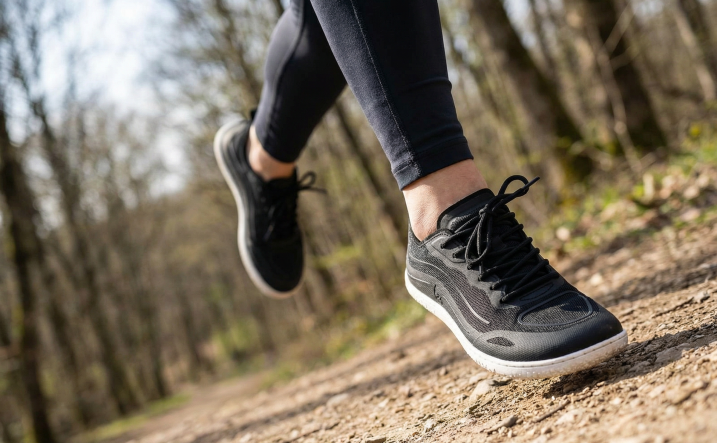
- A sharp stone or glass shard will injure me. – The sole of barefoot shoes is thin, but made from sufficiently durable material to keep you safe. When running completely barefoot, watch out for tall grass where you might overlook a potential hazard.
- Barefoot running isn't for heavier people. – Weight plays a role primarily in heel strikes, but when running barefoot, you don't land on your heel. We'd rather question whether running is the best way to lose weight at higher levels of obesity. Brisk walking can offer similar health benefits with a lower risk of impact injuries.
- There's a risk of stress fractures. – Shorter and lighter steps help prevent fatigue, and barefoot shoes strengthen your feet to handle more. Regardless of footwear type, you should always allow enough time for rest.
- Minimalist footwear isn't suitable for long distances. – Many indigenous tribes prove the opposite. Especially on long distances, you'll appreciate moving in harmony with nature.
- Without a proper sole, you risk slipping and spraining your ankle. – A foot in a flexible sole is more likely to react to uneven terrain and maintain stability, even on trails full of roots and ruts.
How to start running barefoot
Barefoot running is a habit you should build gradually (which applies to all beginnings with barefoot shoes).
- Start slowly – try short runs of no more than 10 to 15 minutes first. Your body needs to establish new patterns before you tackle longer distances.
- Focus on technique – above all, watch your midfoot landing and shorter stride.
- Exercise your feet – strengthen your feet outside of running as well (for example, walking on tiptoes or doing calf-strengthening exercises). Before a run, loosen them up and warm them with a massage.
- Start on soft surfaces – forest paths, dirt, or grass are ideal. Once your feet have strengthened and your landing technique has settled, you can try gravel paths, harder concrete, and asphalt.
- Listen to your body – internal signals are your best guide for when to slow down. Give yourself time to recover. And if you have any doubts about how to proceed, consult your doctor.
How to choose barefoot running shoes
In addition to our general tips on how to choose the right shoes, here are some useful pointers for running shoes specifically:
- Try compromise shoes first. – You don't have to start with thin-soled barefoot shoes right away. Running shoes from Altra (for adults) or Naw (for children) offer plenty of room in the toe box but have a thicker sole that provides better impact cushioning.
- Go with industry leaders. – World-renowned brands Vivobarefoot and Xero Shoes have years of experience with barefoot running shoes.
- Browse all our sports shoes – They're designed with materials and soles that can handle the demands of running.
If you need advice, get in touch via our customer support. We'll be happy to help you find the best running shoes to keep you comfortable even after many kilometres on the road.
We encourage you to stay true to your own pace and find your way to barefoot shoes. Mastering the right technique may take a little while, but you're taking an important step toward preventing health problems in the future.