
More and more people are looking for barefoot shoes for themselves and for their children - and the reason is simple: we do not want to squeeze our feet into conventional footwear. At Footic, we have been selling barefoot shoes since 2014, and during that time we have seen how something once considered niche has become a healthy standard for the whole family.
In this article, we will explain what barefoot shoes actually are, how they differ from conventional footwear and why they are worth trying. There is something to the fact that they do not squeeze the toes, damage the joints or back, and support healthy foot development.
Article contents
- What are barefoot shoes?
- Why wear barefoot shoes?
- How to choose the right shoes?
- Where to buy barefoot shoes?
- Barefoot shoes in practice
What are barefoot shoes?
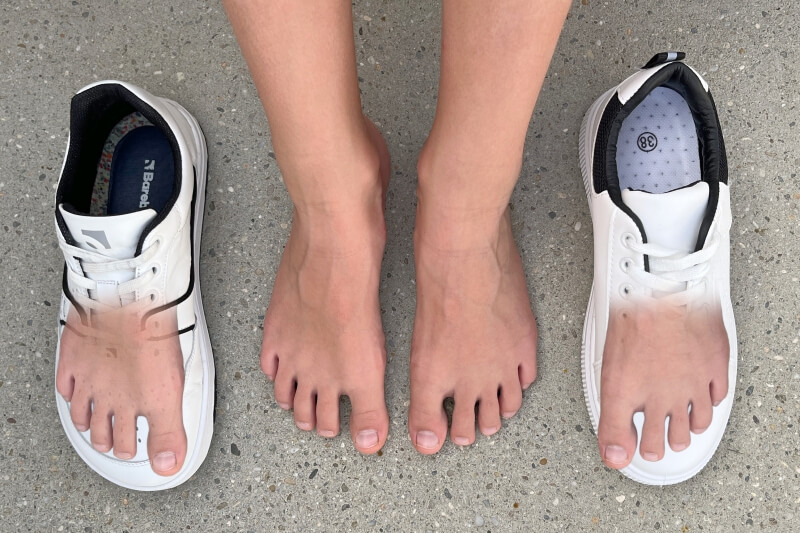
Barefoot shoes are normal shoes whose construction allows the foot to function more naturally - almost as if barefoot. They have no heel and no shaped insole; their sole is flat, thin and flexible. Overall, they are lighter and wider in the toe area.
Key features: How to recognize barefoot shoes?
Barefoot shoe manufacturers offer stylish models for every season and occasion - from sneakers and winter boots to formal footwear. Forget lace-up sandals and five-toe monsters that made barefoot famous. Today, an ordinary person will hardly notice the difference compared to conventional footwear; only a trained eye notices the distinctions:
- Wide toe box - plenty of space in the toe area
- Flat sole - without a heel or otherwise raised heel (or toe)
- Flexibility in all directions - soft and fully flexible sole, unreinforced heel counter
- Thin sole - up to 5 mm thick (usually around 3 mm)
- Insole without shaping - does not support the foot arch
- Low weight - lightweight overall
Based on these features, we distinguish between “100% barefoot shoes” (they meet all points) and “compromise shoes” (they meet only some parameters - usually they have a thicker sole). The quickest test? Take the shoe in your hand and try rolling it into a tube. True barefoot shoes can do this without any problem.
Explaining the term: What does barefoot mean?
“Barefoot” means “without shoes” (a bare foot). In connection with the word “shoes”, it expresses the manufacturers’ effort to protect feet from injury with footwear while getting as close as possible to barefoot movement (which is the most natural for the human body).
This is also reflected in the official definition of barefoot shoes, prepared by the Barefoot Footwear Association in cooperation with the Czech Footwear and Leather Association: “Barefoot footwear (also called barefoot shoes, bare shoes, bosoboty or minimalist footwear) is footwear intended for everyday movement with the aim of simulating the freedom of movement a person has when walking barefoot. It is footwear that respects natural walking.”
A look into history: Who invented barefoot shoes?
Ancient hunters wanted to move faster and protect their feet from pain, so they wrapped animal skins around their feet. It is hard to identify in retrospect who made the first shoes, but they almost certainly met all barefoot requirements. Barefoot shoes are therefore not a modern trend, but a return to a tradition at least 10,000 years old.
Because in modern civilization fashion suppresses naturalness, barefoot shoe manufacturers have appeared all over the world in recent years. They are united by the desire to give their children (and themselves) healthier shoes than conventional mass-produced footwear offers. The lack of such shoes on store shelves led them to make their own barefoot shoes, inspired by traditional methods used by indigenous peoples.
Why wear barefoot shoes?
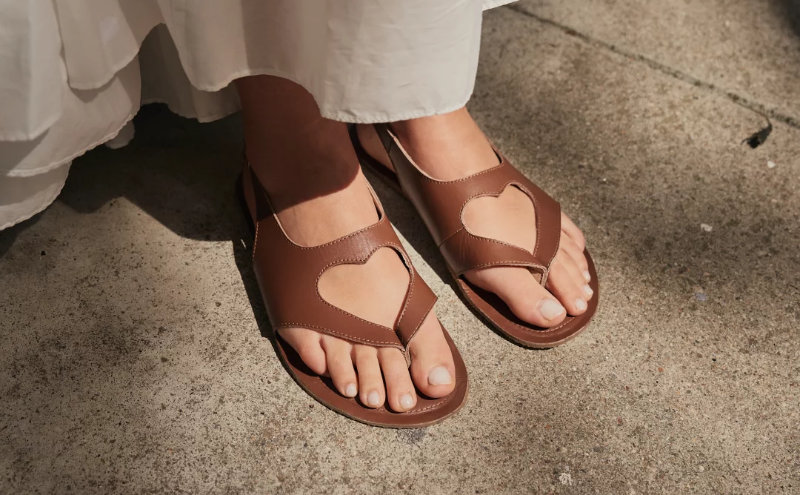
Wearing barefoot shoes pays off because they are both comfortable and healthy. For children, they help with natural foot development; for adults, they bring relief from strain. We are more surprised by those who do not wear barefoot shoes and still squeeze their feet into conventional footwear.
People usually come to barefoot shoes for one of 2 reasons - either they want to prevent problems (especially in children), or they are already dealing with specific difficulties (fallen arches, flat feet, heel spurs, hallux valgus, valgus ankle, knee pain, back pain, etc.). Barefoot helps alleviate problems people have caused themselves through years of wearing unsuitable footwear.
Natural movement: Barefoot vs. conventional shoes
What makes more sense to you? Should the foot adapt to the shape of the shoe, or should the shoe shape respect the needs of the foot? In our opinion, walking completely barefoot is best, because that is when movement is the most natural. But the environment rarely allows it, so try barefoot shoes instead - they feel almost like being barefoot.
| Parameter | Barefoot shoes | Conventional shoes |
| Sole | Thin, flexible (3-5 mm) | Thick, rigid |
| Heel-to-toe drop | Zero (zero-drop) | 8-15 mm |
| Toe box | Wide, anatomical | Narrowed |
| Insole | Flat, without arch support | Shaped |
| Weight | Low | Higher |
Perhaps we need a reminder of what natural walking actually looks like. Therapists from FYZIOklinika give the example of a lion and its soft, quiet stepping. Now imagine yourself rushing through the city under stress, thudding down on your heels (disconnected from any naturalness in a whirl of thoughts or music in your headphones).
The thin sole of barefoot shoes makes you instinctively slow down and pay more attention to every step. Suddenly you realize that the city is not a smooth flat surface, but a jungle full of bumps, cracks, stones, leaves, soil, twigs and many other small obstacles. And that you are finally using one of the senses you had left idle for so long in conventional footwear.
Comfort: Impressions from wearing barefoot shoes
When you put on barefoot shoes for the first time, you realize how comfortable shoes can be. At the same time, you understand how much you have been squeezing your feet into narrow, hard shoes until now. And that once you have tried this comfort, it will probably lead to a gradual replacement of your entire shoe cabinet, because you will no longer want to lower your standards.
Thanks to the wide toe box of barefoot shoes, your toes can finally spread out and move freely inside the shoes. You will be able to keep your balance better and push off more naturally when walking. A flexible sole allows the foot to react more elastically to changes in the surface. The overall lightness then contributes to the feeling that you are not wearing shoes at all.
Health: What are the benefits of barefoot shoes?
People rarely realize how closely their back, hip, knee and other musculoskeletal pain is connected to wearing unsuitable footwear. The whole body is an interconnected system, and health starts from the feet. We are not saying barefoot shoes are a cure-all, but they help prevent later problems:
- Thanks to the space in the toe box, toe deformities do not develop - bunionette, hallux valgus, hammer toes and others.
- A flat sole keeps the center of gravity in an optimal position - it does not overload the rest of the body by tilting it forward or backward.
- Flexible materials reduce the risk of ankle sprains - the foot actively adapts to the terrain instead of slipping over it in a rigid shoe.
- A thin sole stimulates nerve receptors - feedback from the sole of the foot improves body reactions and trains the brain.
- An unshaped insole strengthens the foot arches - instead of passive support, it makes the muscles and tendons of the foot work actively. Strengthening them helps in the fight against flat feet.
How to choose the right shoes?
We have prepared a guide for choosing the right shoes in 3 simple steps:
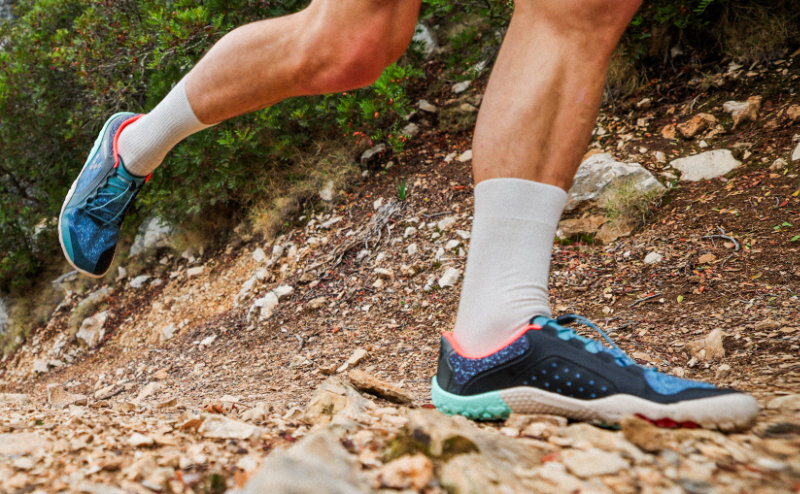
- Measure the foot - in the desired category, then filter models with an inner shoe length about 10 to 15 mm longer than the measured foot length (the extra space differs depending on the type of shoe).
- Compare the foot type - everyone has a different foot shape, toe shape, heel width and instep height. That is why we list the recommended foot type for each model.
- Ask the specialists - if you want to avoid the hassle of trying several sizes and returning shoes, let our customer support help you choose.
Read the complete guide on how to choose shoes
For children: Shoes for natural development
We recommend barefoot shoes for children from their very first shoes, because they need to maintain the naturalness of barefoot walking. In preschool children, the skeleton is still developing, so training correct movement patterns in early childhood fundamentally affects the rest of life.
In general, support your children in walking completely barefoot at home, and outside too whenever the environment and weather allow it. Even thin socks bring a certain kind of restriction, especially if beginning walkers are trying to find support without slipping.
For the youngest children, a simple rule applies: soft baby shoes at home, first walking shoes outside. Soft baby shoes are soft, flexible and, by their construction, closest to walking barefoot - ideal for beginning walkers moving around the home. For outdoor adventures, barefoot shoes with a protective sole are a better choice.
For adults: Shoes for fewer problems
We believe that it is never too late for health prevention. Bad shoes are like cigarettes - using them has a negative impact on your body, but if you stop in time, you reduce the risk of more serious problems in the future.
You can switch to barefoot shoes even in old age; seniors will certainly appreciate more space for swollen feet or better stability. Of course, regardless of your age, the unwritten rule always applies: if you already have any health problems that could complicate wearing barefoot shoes, always consult your doctor first.
Guide: How and when to start with barefoot shoes?
Are you considering trying barefoot shoes for yourself or your children? For beginners, we have prepared an introductory guide, How and When to Start with Barefoot Shoes, in which we take you step by step through everything important. And do not worry - you are not alone, because millions of people around the world wear barefoot shoes.
Find out how to get your first barefoot shoes
Where to buy barefoot shoes?
At Footic, you will find the widest range of barefoot shoes for children, women and men of all ages.
- We have been running an e-shop with barefoot footwear since 2014, and our customers themselves confirm the quality of our services.
- We have over 30 thousand pairs of shoes in stock, with next-day delivery and easy returns within 21 days.
- You can also visit us in person at our stores in Prague-Smíchov and Písek in South Bohemia.
- For customers and fans, we offer loyalty discounts and other benefits.
E-shop: The widest selection and quick, worry-free shopping
In our e-shop, you will find a much wider selection of shoe sizes and models than could fit into any store. You do not have to go anywhere (especially with children); you can order in a few clicks from the comfort of your home. The goods will be delivered the next day, and if something does not fit, you can easily send it back and we will refund your money.
Accessories: What else is worth buying?
What else besides barefoot shoes is useful to have at home (and you can get it from us)?
- For barefoot shoes, get barefoot socks straight away; they are wider in the toe area.
- Use cleaning products regularly; quality care will extend the life of your shoes.
- Children will look great at school with stylish backpacks and pencil cases, bottles, lunch boxes and erasable pens.
Browse accessories for barefoot shoes
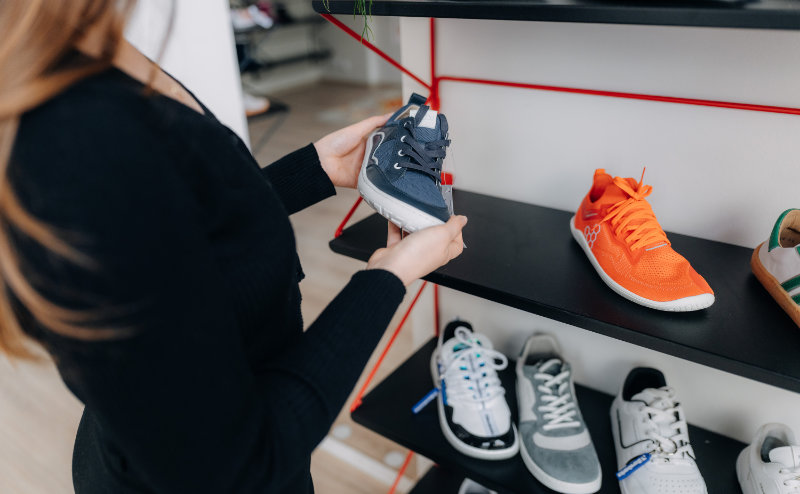
Barefoot shoes in practice: specialists, reviews and frequently asked questions
Would you like to learn more about barefoot shoes? We live barefoot here, so when browsing our website or social media, you will come across plenty of additional information (and if you are unsure, do not be afraid to ask). To make things easier, we have selected below a few of the most common topics people deal with around barefoot shoes.
Health professionals: Who should you turn to?
We work closely with physiotherapists and other health professionals, so we can only encourage you to regularly discuss the health condition of your feet and the choice of the most suitable shoes with them. Not everyone agrees on the benefits of barefoot footwear, but at the very least they will give you their opinion.
If, on the other hand, we should warn you about anyone, it would be doctors who are more involved in selling their own products (for example orthopedic insoles) than trying to restore strength to your feet through active exercise. Of course, if your diagnosis requires insoles, definitely use them; we simply recommend wearing them in barefoot shoes to achieve a better effect.
Personal user experience: Who can you trust?
There are many myths about barefoot shoes circulating online, but they are spread mainly by people who have never tried them. By contrast, after 12 years of testing new models, we have a great deal of feedback from employees and their families, so you can trust that we have tried what we talk about first-hand.
Whenever someone claims certain facts, find out how much they are backed by their own experience. To stay as objective as possible, we asked our customers about their impressions. Take a look at honest reviews from people who actually wear barefoot shoes.
FAQ: Answers to the most common questions
Our customer support specialists will be happy to answer any question, but to make things easier, we are adding the most common questions and answers here:
When should I put shoes on my child?
Put shoes on your child when they spend most of their waking time walking independently on two feet. If the environment allows it (especially at home), let them walk barefoot for as long as possible (even at a later age).
Should children's shoes be hard or soft?
In hard shoes, children cannot react flexibly or roll the foot correctly. If they have not been diagnosed with hypermobility (which requires a firm heel counter), definitely choose soft shoes for them. Shoes should not be stiff, but they should hold firmly around the ankle.
How do I choose between two shoe sizes?
If your foot length (including the extra space) falls exactly between two shoe sizes, choose the larger one, because it will give you more room for possible foot growth and active foot work. On the other hand, it must not be too much larger (extra space over 17 mm), so the shoe is not loose and you do not trip over the toe.
Should I buy second-hand shoes?
We understand that second-hand shoes save money and the environment, but on the other hand, we cannot recommend them. The previous user may have worn the shoes down in a way that is unsuitable for your foot. If shoes are to be passed on, then only those that have been used minimally and are in perfect condition; otherwise, it is better to invest in new ones.
Can I do sports in barefoot shoes?
There are certainly sports models available too. We have dedicated an entire Barefoot and Sport article to them, where you will also find tips for individual sports disciplines.
Are barefoot shoes suitable for formal occasions?
We do not see a problem with that - quite the opposite. The range includes many elegant men's and women's formal barefoot shoes that will keep your feet comfortable at all kinds of festive events.
Can I wear barefoot shoes in the city?
You can wear barefoot shoes on any hard surface; you just need to realize that you must always adapt your walking style. You only create health problems by carelessly stomping in a hurry, which barefoot shoes will quickly teach you to stop doing.
Barefoot articles: Where can you find information about barefoot shoes?
You have successfully covered the barefoot basics, so where next?
If you want additional information, we regularly update shoe comparison reviews and add expert facts about healthy footwear to the Barefoot Academy section.
If you already know everything you need about barefoot shoes, feel free to start choosing them. At Little Shoes, you will find thousands of models in stock, with new ones added every day. See for yourself: